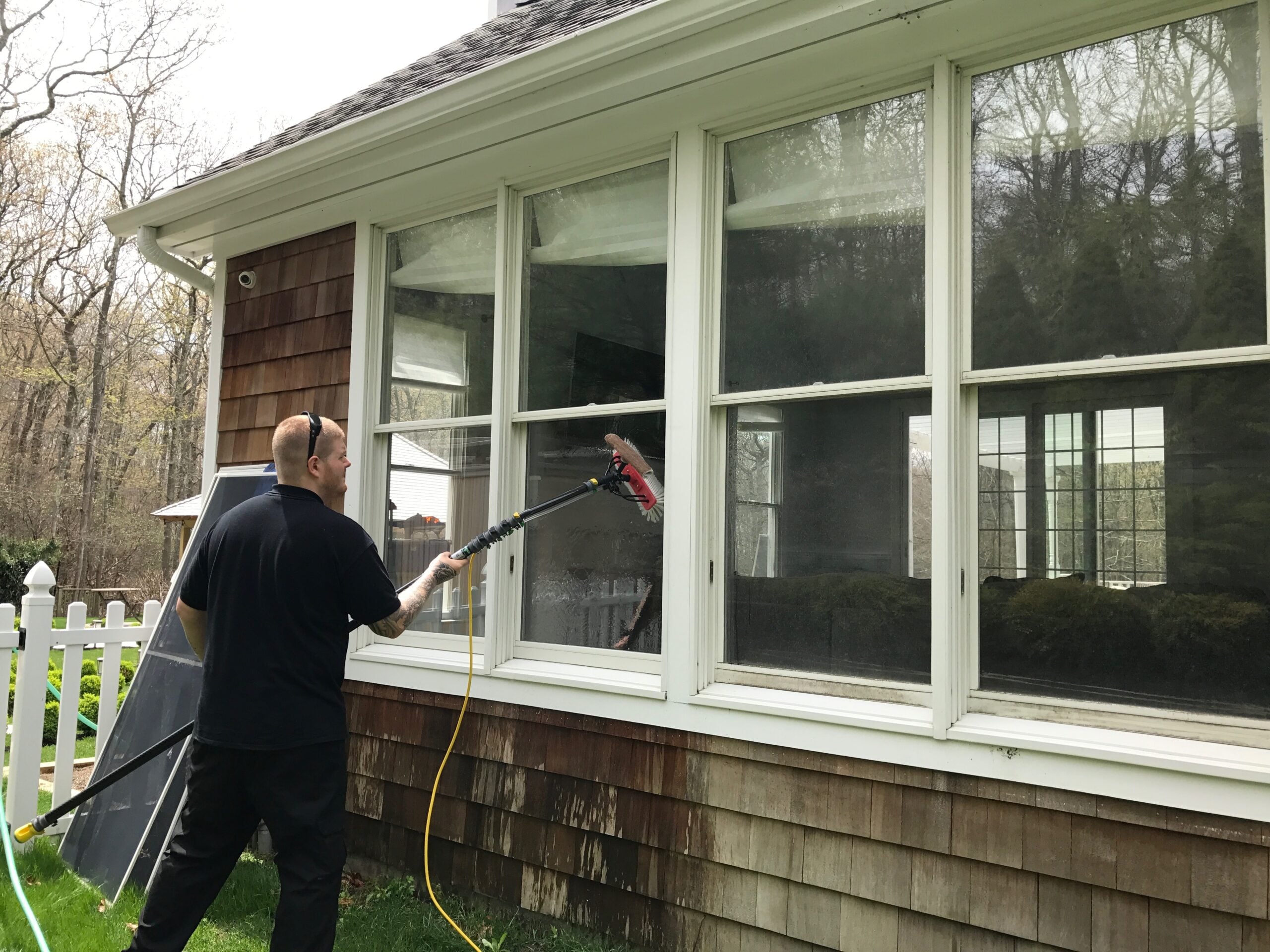
You schedule a spring window cleaning, then notice yellow pollen collecting outside. Or you plan a fall visit and wonder whether to wait until the leaves have finished dropping.
For Manhasset homeowners, those are practical questions. Long Island’s seasonal conditions affect both what collects around your windows and when cleaning makes sense.
Late spring and fall are useful planning windows for a fuller cleaning, with additional attention based on your property’s exposure and visible buildup. The exact timing should follow conditions at your home, your window manufacturer’s guidance, and the forecast for the appointment.
Here’s how to build a window cleaning schedule around Long Island’s seasons.
Spring: plan around the pollen you can see
Tree pollen is an important part of Long Island’s spring cycle. Stony Brook Medicine describes the traditional local pattern as tree pollen in March through May, grass pollen in June and July, and weed pollen from August through October. The timing can shift between years.
For window cleaning, the useful question is whether your property is still receiving noticeable deposits.
Check accessible exterior glass, screen frames, and lower ledges. If you see a fresh yellow coating returning shortly after wiping an area, that is information to share when arranging service.
Should you wait until the pollen settles?
If your main goal is to remove spring buildup before summer, late May or June may be a sensible booking window, depending on what you observe at your home. This is a planning suggestion based on the seasonal pattern, not a fixed date when pollen disappears.
If your windows already look dirty in April, or you’re preparing for guests, an earlier cleaning can still meet your immediate needs. Simply expect outdoor surfaces to remain exposed to whatever is circulating afterward.
There is also no completely pollen-free summer window to aim for: the types of pollen change through the season.
Spring priority: Discuss exterior glass and visibly dusty screens, then assess whether interior glass needs cleaning too.
Summer: consider sun exposure and sprinkler spots
During summer, two useful things to check are direct sunlight on the glass and irrigation around the house.
Andersen advises avoiding glass cleaning in direct sunlight because cleaning solution can dry before it is removed. It also notes that mineral content in water can leave spots and recommends keeping sprinkler spray off windows.
That makes the conditions on cleaning day important. Tell your cleaner which sides of the house receive strong sun, and let them determine an appropriate approach.
If the same lower windows repeatedly develop spots, watch a sprinkler cycle. Does the spray reach the glass? Adjusting its direction may reduce a recurring source of marks.
Mention existing spots in your estimate request. Some marks need separate assessment, so confirm whether routine cleaning or hard water spot removal is appropriate.
Does summer mean you need another whole-house cleaning?
Use the condition of the windows to decide.
If exterior glass needs attention while interior surfaces remain clean, ask about an exterior visit between fuller cleanings. If only a few frequently touched interior windows are smudged, describe those areas.
Summer priority: Check exterior glass, irrigation exposure, and the windows you notice most from frequently used rooms.
Fall: combine window care with the season’s outdoor cleanup
Fall is a useful time to assess what has accumulated around the windows during summer and early autumn.
Where trees are close to the house, inspect accessible ledges and screens as leaves fall. Look for loose debris around the lower frame and in channels that become visible when you open a window.
NOAA’s regional climate description identifies fall and winter as the more frequent seasons for coastal storms, which can bring substantial precipitation and strong winds. Your home’s exposure will influence what you notice afterward.
Before or after the leaves fall?
For a property where leaf debris collects around windows, booking after the main accumulation has been cleared may make practical sense.
October or November can be a fall planning window, subject to local conditions and availability. If trees are still shedding heavily beside your windows, discuss the timing. If you need the house ready for an earlier event, that date may take priority.
As temperatures fall, the forecast and access conditions matter more. Confirm the appointment rather than assuming a particular calendar week will remain suitable.
Fall priority: Review glass, screens, and accumulated debris, and agree on which surrounding surfaces will be cleaned.
Winter: let the forecast guide exterior service
Winter introduces different scheduling considerations.
The region can experience rain, snow, and mixed precipitation, with conditions changing during a storm. NOAA’s climate description documents that seasonal pattern.
For homeowners, the practical step is to ask whether exterior work is available and suitable for the proposed date. Freezing conditions, wind, and slippery access may affect how a visit is planned.
Interior cleaning may be worth discussing if fingerprints and household smudges are your main concern. Ask what service can be arranged rather than treating winter as an automatic whole-house cleaning appointment.
When spring arrives, reassess exposed exterior glass and lower frames for the buildup that actually remains.
Winter priority: Discuss interior needs and confirm exterior service against the forecast and access conditions.
Rain occurs throughout the year, so plan around conditions
Waiting for a completely dry season is unlikely to provide a useful window cleaning strategy on Long Island.
USGS’s historical precipitation research describes rainfall and other precipitation as distributed fairly consistently through the year, rather than concentrated in one distinct rainy season.
Use the forecast to discuss the appointment day, while judging the need for cleaning from the windows themselves.
After weather passes, look at the result. Are there visible marks or debris? Do particular exposed windows need attention? You do not need to assume that every shower requires another cleaning.
Ask the cleaner how weather affects scheduling and what their policy is if conditions change.
How coastal exposure changes the schedule
Manhasset’s North Shore setting makes exposure worth discussing, especially for a property that experiences coastal spray.
The relevant detail is what reaches your windows. Explain whether the glass is exposed to spray, sheltered by surrounding buildings, or repeatedly develops visible deposits.
Andersen’s care guidance for certain glass and frame materials calls for more frequent cleaning in coastal settings with higher airborne particle levels. The instructions are product-specific, so check the guidance for your windows before choosing a maintenance interval.
A recurring cleaning conversation can then be based on your property’s condition. A North Shore address alone does not establish how often every surface needs cleaning.
A practical seasonal plan for a Manhasset home
Use this as a starting framework to discuss, then adjust it to your property.
| Planning period | What to assess | Cleaning to discuss |
|---|---|---|
| Late spring, often May–June | Visible spring pollen and remaining exterior buildup | A fuller cleaning, including screens if needed |
| Summer | Exterior film, sprinkler spots, and interior smudges | Targeted work or an exterior maintenance visit |
| Fall, often October–November | Summer buildup and debris around accessible windows | Glass cleaning and requested screen or lower-frame attention |
| Winter | Interior marks, the forecast, and access conditions | Interior cleaning or exterior service if available and suitable |
These are proposed planning periods, not local service rules. Your preferred result, product-care instructions, and actual conditions should guide the final schedule.
Request window cleaning that fits the season
When contacting a cleaner, describe both the work you want and the conditions you’re noticing.
For example:
“We’re in Manhasset and would like interior and exterior cleaning after the heavier spring pollen settles. Several screens look dusty, and the garden-side windows have recurring spots. Please let us know what work you recommend and what the estimate would include.”
That gives the conversation a useful starting point.
Always Bright & Clear provides one-time and recurring window cleaning for Manhasset homeowners. Owner Joe can discuss your needs, available timing, and the scope of your estimate.
Request your free Manhasset window cleaning estimate or call 631-236-2990.